

Skin Cancer Prevention with RN-Written Sun Safety Guide from Urban Allure San Francisco Bay Area
Skin cancer is the most common cancer in the United States and the most preventable. At Urban Allure Medical Spa in San Francisco Bay Area, CA, our California-licensed Registered Nurses work with patients every day whose sun damage, pigmentation changes, and photoaging are the visible result of years of UV exposure. This page provides evidence-based skin cancer prevention guidance from our clinical team, covering sun protection, early detection, and the role that medical-grade skincare and in-clinic treatments play in maintaining long-term skin health. For personalized skin health guidance, book a complimentary consultation with our RN team at our San Francisco Bay Area studio.
Understanding UV Radiation
UV radiation from the sun is the primary environmental cause of skin cancer including basal cell carcinoma, squamous cell carcinoma, and melanoma. UV radiation falls into two categories that affect the skin differently:
UVB radiation penetrates the surface layers of the skin and is responsible for sunburn and direct DNA damage to skin cells. It is the primary driver of basal cell and squamous cell carcinoma.
UVA radiation penetrates more deeply into the dermis and is responsible for photoaging, collagen breakdown, fine lines, pigmentation, and loss of skin elasticity. UVA radiation also contributes to melanoma risk. UVA rays are present year-round, penetrate clouds and glass, and are not blocked by windows.
This is why daily broad-spectrum SPF which protects against both UVA and UVB is essential 365 days a year, not just on sunny summer days. It is a core recommendation from every licensed RN at Urban Allure and a non-negotiable component of any medical-grade skincare routine.


Sun Protection
The sun sustains life and feels good, but it can be your skin’s worst enemy. While every sunburn can increase your risk of skin cancer, it’s not just those big days at the beach or ballgame that cause trouble. Each time you run out to get the mail, walk the dog or commute to work without sun protection also adds to the damage that can lead to skin cancer (as well as leathery skin, dark spots and wrinkles).
No single method of sun defense can protect you perfectly, though. That’s why we created this roundup of advice for you. The best path to beautiful, healthy skin is to adopt as many of these steps as possible into your lifestyle, and make them daily habits everywhere you go, all year long.
-
Clothing can provide a great barrier against the sun’s ultraviolet (UV) rays. Its protection is consistent over time and doesn’t wear off like sunscreen does. Many new fabrics offer high-tech protection and breathability, too. The more skin you cover (high neck, long sleeves, pants), the better, and a hat with a wide brim all the way around (three inches or more) is best because it helps shade your eyes, ears, face and neck. Also wear UV-blocking sunglasses to protect your eyes and the skin around them.
What does UPF mean? Look for UPF, which stands for ultraviolet protection factor, on labels for clothing, hats and fabrics. The number indicates what fraction of the sun’s UV rays can penetrate the fabric. A shirt labeled UPF 50, for example, allows just 1/50th of the UV radiation to reach your skin.
The pitfall: Any clothing leaves some skin exposed, so you need sunscreen, too. Don’t forget to apply it to your hands, especially after washing them.
-
When you are outside, think of shade as your refuge, especially between 10 AM and 4 PM, the peak hours of sun intensity.
Walk on the shady side of the street, sit under an awning or sun-protective umbrella, duck onto the covered porch at a pool party or even under a tree.
The pitfall: Shade isn’t a perfect shield. Some UV rays can still reach your skin. They can pass through leaves and branches, hit your skin from the side and reflect off water, sand, glass and concrete.
-
Sunscreens come in many formulations and delivery methods, and it can take trial and error to find the one you like best. Whether it’s a sport spray, an easy-to-use stick or a rich moisturizer with antiaging ingredients, the best sunscreen is the one you will use every day.
SPF stands for sun protection factor. The number tells you how long the sun’s UVB rays would take to redden your skin when using a particular sunscreen compared with the amount of time without sunscreen. So if you use an SPF 15 product exactly as directed (applied generously and evenly, and reapplied after two hours or after sweating or swimming), it would take you 15 times longer to burn than if you weren’t wearing sunscreen.
Broad spectrum. The words “broad spectrum” on a label indicate that the sunscreen contains ingredients that effectively protect against UVA rays as well as UVB.
Water resistance. While sunscreens can’t claim to be waterproof, they can be labeled water resistant for either 40 or 80 minutes. Yes, you can burn even when you’re in the water, so reapplying is key!
Sensitive skin. Products containing zinc oxide and titanium dioxide, sometimes referred to as mineral or physical formulas, may be less likely to cause skin irritation in people who have sensitive skin.
The pitfall: Most people don’t apply sunscreen exactly as directed. They may not apply it liberally enough, might miss spots and may forget to reapply regularly. Slather it on!
The Skin Cancer Foundation advises everyone to use a broad-spectrum sunscreen with an SPF of 15 or higher every day. For extended outdoor activity, use a water-resistant, broad-spectrum sunscreen with an SPF of 30 or higher. Reapply every two hours or after swimming or sweating.
-
Infants: It’s best in the first six months to keep infants out of the sun rather than use sunscreen on their sensitive skin. Clothing should cover baby’s vulnerable arms and legs, and don’t forget to use hats, sunglasses and stroller sun shades.
Toddlers: In addition to providing a protective hat and clothing, you can apply sunscreen to children starting at six months.
The pitfall: Unexpected exposure can happen, for example, with a babysitter. Be prepared; talk to caregivers in advance about sun protection.
-
While glass blocks UVB rays pretty well, it allows UVA rays to pass through. This is true of your windows at home as well as on the road.
Car windshields are treated to shield drivers from most UVA rays, but side, back and sunroof windows usually aren’t. When you’re in your car, protect yourself and your family with hats, clothing, sunglasses, sunscreen, whatever it takes. Another option is to have UV-protective window film applied to windows, in your car or at home.
The windows on airplanes, trains and buses also allow UVA rays to pass through. That’s why airline pilots, crew members and even frequent travelers may get more skin cancers than other people.
The pitfall: You need to plan ahead before traveling and make sure you have sunscreen on and protective clothing with you.
-
It’s simple: Don’t use a tanning bed — ever. Indoor tanning (even one time) raises the risk of all kinds of skin cancer, including melanoma. In fact, using a tanning bed before age 35 increases your risk of melanoma by 75 percent.
The pitfall: While a number of states have implemented laws prohibiting minors under a certain age (varying from 18 to 14) from using tanning beds, or requiring parental consent, other states have not restricted access. Peer pressure to be tan can affect your better judgment at any age. Say no!
-
Using sun protection consistently from an early age is the strongest defense against developing skin cancer.
No person or method is perfect, though, and one in five Americans will develop skin cancer by the age of 70.
The Skin Cancer Foundation recommends that all adults do monthly skin self-exams and see a dermatologist annually, or more frequently if they see something suspicious or have risk factors. Learn more about early detection.
Reviewed by: Deborah S. Sarnoff, MD and Skin Cancer Foundation
Last updated: June 2021

How to Perform a Skin Self-Exam, and What to Look For
The desire to avoid illness is a good enough motivator to develop healthy habits. We eat well, exercise, wash our hands and take vitamins. Avoiding skin cancer is no exception — we wear sunscreen, seek the shade and cover up with clothing to reduce our risk. Unfortunately, even those with the most diligent sun protection regimen aren’t immune.
Since preventive behaviors can’t stop every illness, learning to nip diseases in the bud can prevent the most severe outcomes. Skin cancer is a great example of how detecting and treating a disease early can have an impact on prognosis. With melanoma, the most dangerous form of skin cancer, the five-year survival rate is 99 percent if the cancer is found early. The survival rate drops to 68 percent if the disease reaches the lymph nodes, and 30 percent when the disease metastasizes to distant organs. While the more common basal cell carcinomas and squamous cell carcinomas have high cure rates, they can become disfiguring and even life threatening if not caught early.
Reference: Skin Cancer Foundation
-
To help catch skin cancer early, The Skin Cancer Foundation recommends an annual skin check with a professional dermatologist. But it’s still important to keep tabs on your skin between appointments — the Foundation and Dr. Brackeen recommend performing a self-exam once a month. Dr. Brackeen says a good self-exam covers every nook and cranny of the body, and that performing a thorough exam requires the right setting and tools. He recommends performing your self-exam in a room with good lighting, with both a full-length mirror and hand mirror available to help you look at hard-to-see spots like your back.
You can use a hair dryer to see the skin on your scalp, and Dr. Brackeen says that combing through wet hair after a shower is also an option.
Even with mirrors, some spots can be hard to see. This is why Dr. Brackeen recommends enlisting a trusted friend or family member to help you out. That person can even take a few reference photos of the areas you can’t see, which will allow you to compare each month’s photos and make sure nothing is new or changing.
Any new or changing spots are certainly a red flag for potential skin cancers, but there are other characteristics that could be a cause for concern. Dr. Brackeen says to note anything unusual: growths that bleed, scab or don’t heal over the course of a few weeks. Keep an eye out for pearly looking moles, moles with multiple colors and moles with jagged or irregular edges. You should also look for moles that look different from the rest of your moles or are larger than six millimeters (about the size of a pencil eraser). For identifying potential melanomas, the ABCDEs are a good rule of thumb (though not a catch-all). The most important point is that if you find anything new, changing or unusual on your skin, do something about it.
“If you find something fitting one of these descriptions or anything else that does not feel right to you, don’t wait, hesitate or delay; see a dermatologist,” Dr. Brackeen says.
Monthly checks combined with an annual professional skin exam should be sufficient for most people, but some may want to increase the frequency of their self-exams. Dr. Brackeen says that those with risk factors including a history of skin cancer and those with many moles should perform self-exams more often, as they are at a higher risk for skin cancer.
Combined with a complete sun protection regimen, frequent self-exams can help you be confident that you’re doing all you can to keep yourself safe from the world’s most common cancer.
-
Skin cancer prevention requires a comprehensive approach to protecting yourself against harmful UV radiation.
That’s because UV radiation from the sun isn’t just dangerous, it’s also sneaky. Not only can it cause premature aging and skin cancer, it reaches you even when you’re trying to avoid it – penetrating clouds and glass, and bouncing off of snow, water and sand. What’s more, sun damage accumulates over the years, from prolonged outdoor exposure to simple activities like walking the dog, going from your car to the store and bringing in the mail.
The Skin Cancer Foundation recommends that you:
Seek the shade, especially between 10 AM and 4 PM.
Don’t get sunburned.
Avoid tanning, and never use UV tanning beds.
Cover up with clothing, including a broad-brimmed hat and UV-blocking sunglasses.
Use a broad-spectrum (UVA/UVB) sunscreen with an SPF of 15 or higher every day. For extended outdoor activity, use a water-resistant, broad- spectrum (UVA/UVB) sunscreen with an SPF of 30 or higher.
Apply 1 ounce (2 tablespoons) of sunscreen to your entire body 30 minutes before going outside. Reapply every two hours or after swimming or excessive sweating. Find sunscreen by searching our Recommended Products.
Keep newborns out of the sun. Use sunscreen on babies over the age of six months.
Examine your skin head-to-toe every month.
See a dermatologist at least once a year for a professional skin exam.
Get all the details: Your Daily Sun Protection Guide. Skin Cancer Prevention PDF.
“Early detection allows us to treat some skin cancers with topical medicines or modalities that are not effective for cancers that are found later,” Dr. Brackeen says. “Even when treated with surgery, early skin cancers leave smaller scars and tend to have much fewer complications (like bleeding and infections).”
What To Look For: ABCDES of Melanoma
Download the AAD's body mole map to note the results of your self-examination. Consult your dermatologist immediately if any of your moles or pigmented spots exhibit:
Reference: American Academy of Dermatology
Early Detection — Know Your ABCDEs
-

A is for Asymmetry
One half of the spot is unlike the other half.
-
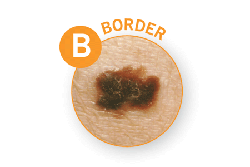
B is for Border
B is for Border
-

C is for Color
The spot has varying colors from one area to the next, such as shades of tan, brown or black, or areas of white, red, or blue.
-

D is for Diameter
While melanomas are usually greater than 6 millimeters, or about the size of a pencil eraser, when diagnosed, they can be smaller.
E is for Evolving
The spot looks different from the rest or is changing in size, shape, or color.

The Role of Med Spa Treatments in Skin Health
While Urban Allure is an aesthetic medical spa not a dermatology or oncology practice several of the treatments we offer in San Francisco Bay Area play a meaningful role in supporting long-term skin health alongside a sun protection regimen:
Photo Facial (IPL)
IPL photo facial treatments address sun damage, sun spots, and UV-induced pigmentation changes — the same visible consequences of chronic UV exposure that are associated with elevated skin cancer risk. Regular IPL treatments can help clear cumulative sun damage and improve overall skin health, while your RN monitors treated areas for any changes worth flagging for dermatological evaluation.
Medical-Grade Skincare
A consistent home skincare routine — including daily broad-spectrum SPF, antioxidant serums, and retinoids — is one of the most effective long-term strategies for reducing photoaging, maintaining skin barrier function, and supporting the skin's natural repair mechanisms.
DiamondGlow Facial
Regular DiamondGlow treatments support skin cell turnover and skin clarity, making it easier to notice changes in skin texture, pigmentation, or lesion appearance that might warrant further evaluation.
Chemical Peels
SkinMedica chemical peels address hyperpigmentation and sun damage — and are often part of a long-term skin health protocol for patients with significant photoaging.
These treatments complement but do not replace annual dermatological skin checks and a rigorous daily sun protection routine.

Ready to Talk Skin Health with Our RN Team in San Francisco Bay Area?
Urban Allure's licensed Registered Nurses are available for personalized skin health consultations at our San Francisco Bay Area studio covering sun protection, skincare routines, treatment planning, and the management of existing sun damage or pigmentation concerns. Book your complimentary consultation today.